Why rice cakes seem like a perfect diet snack
That first bite can feel almost weightless—crisp, dry, and loud enough to register as “a real snack,” even if your stomach still feels a little undecided. The thin round shape also makes it easy to count: one, maybe two, and you’re done. For busy days, that kind of built-in limit can feel like control.
Part of the appeal is how the snack looks and reads. A rice cake is light in the hand, often sold in “plain” flavors, and the nutrition label tends to show a small number per piece. It’s easy to assume that means it will behave like other filling foods in your day, even when the experience is inconsistent.
But crunch can trick the brain into equating volume and effort with staying power. When the food breaks down quickly and doesn’t bring much protein, fat, or fiber with it, the body may treat it more like a quick hit than a slow-burn snack.
Calories: light weight doesn’t always mean light energy
It can be surprising how “real” a snack feels when it barely seems to weigh anything. That’s where rice cakes can confuse the moment: the hand senses lightness, the ears hear crunch, and the brain often files it under “almost no calories,” even though the math isn’t always that simple.
A plain rice cake is usually around 30–60 calories depending on size and brand, so two or three can quietly become a small snack. The bigger shift often comes from what lands on top. A tablespoon of nut butter, a slice of cheese, or a drizzle of honey can add more energy than the rice cake itself, sometimes without changing how full you feel right away.
This mismatch—light texture, faster digestion, and add-ons that raise calories—can make it harder to predict what that snack is doing for your day, especially if you’re also watching blood sugar or trying to stay satisfied until the next meal.
What drives fullness beneath the surface
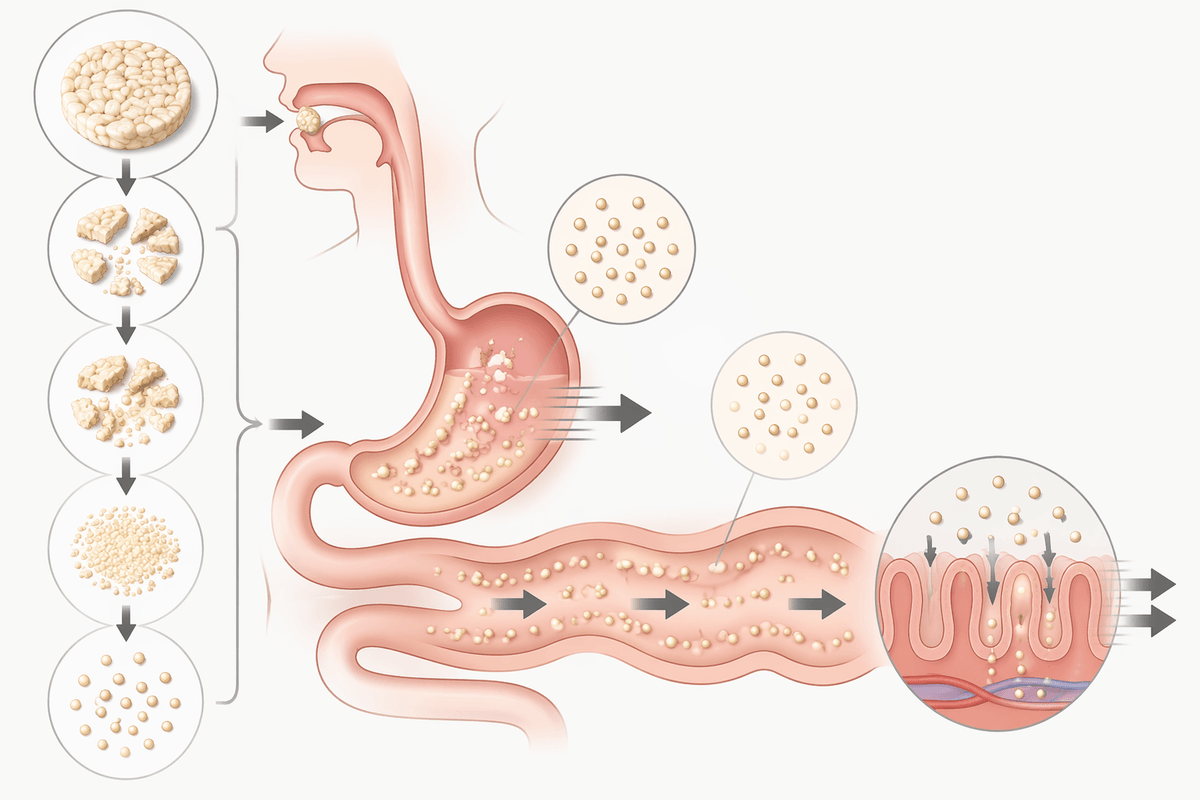
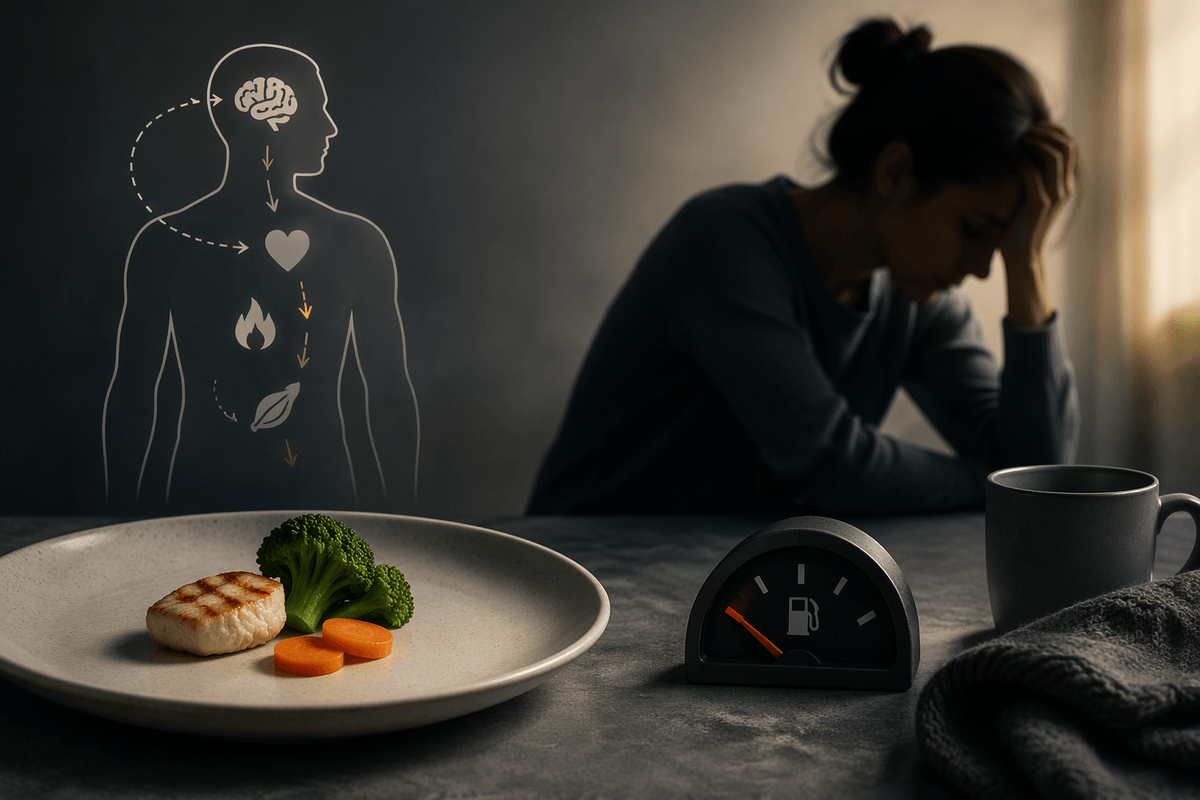
You might notice a brief “settled” feeling after a rice cake, then a hollow edge returns sooner than expected. That quick swing can be confusing, especially when the snack felt substantial in the moment and the portion looked controlled.
Fullness is partly mechanics and partly chemistry. The crunch and dry bulk can create a sense of effort and volume in your mouth, which can nudge the brain toward “I ate something.” But once it reaches the stomach, a plain rice cake doesn’t add much that slows the emptying process—there’s usually not much protein, fat, or fiber to keep it moving gradually.
At the same time, the puffed, refined starch tends to break down quickly. In some people, that faster digestion can lead to a quicker rise and then drop in blood glucose over the next hour or two, which the body may interpret as “time to eat again,” even if you didn’t plan on another snack yet.
Carbs, puffing, and the fast-hunger rebound
Sometimes the shift shows up as a familiar restlessness about an hour later—nothing dramatic, just a sudden sense that you could eat again even though you remember snacking. That’s often the “puffed” part showing its downside. The airy texture that makes a rice cake feel big is mostly created by expanding refined starch, not by bringing along much that slows digestion.
Once you chew it, a rice cake can break down into small starch particles quickly, which may move through the stomach faster than you expect. In some people, that can mean a quicker rise in blood glucose, followed by a dip as insulin helps clear that glucose from the bloodstream. When that dip happens, hunger signals can feel sharper and more urgent—almost like your body is correcting a mistake—despite the snack looking “light” and controlled.
One day, a couple of rice cakes might hold you over; another day, the same amount seems to “open up” your appetite. Stress, sleep, what you ate earlier, and how long it’s been since your last meal can all change how strong that rebound feels.
The topping effect: turning crunch into staying power
It’s often the moment you add something creamy that the snack stops feeling like it “vanishes.” Plain rice cakes can leave you with a clean, empty finish—crunchy in the mouth, but not much lingering comfort in the body. That’s where toppings can change the whole timeline, even though it can be hard to predict at first.
When a rice cake is paired with protein, fat, or fiber, digestion tends to slow down. That may mean glucose moves into the bloodstream more gradually, and the stomach empties less quickly, so the “I could eat again” signal doesn’t spike as sharply. The calories can climb fast: nut butters, cheese, avocado, and sweet spreads can easily outweigh the base. That’s not automatically a problem—it just makes the snack less “light” than it looks, which is where people often misread what happened.
In practice, the most satisfying combinations are usually the ones that feel slightly heavier and take a bit more effort to finish, like yogurt-based spreads, cottage cheese, or hummus with something fibrous on top. If you’re still feeling that rebound an hour later, it can be a clue that the topping didn’t add enough staying power, or that the portion looked controlled but wasn’t actually matched to your hunger.
Snack ideas that match different hunger situations
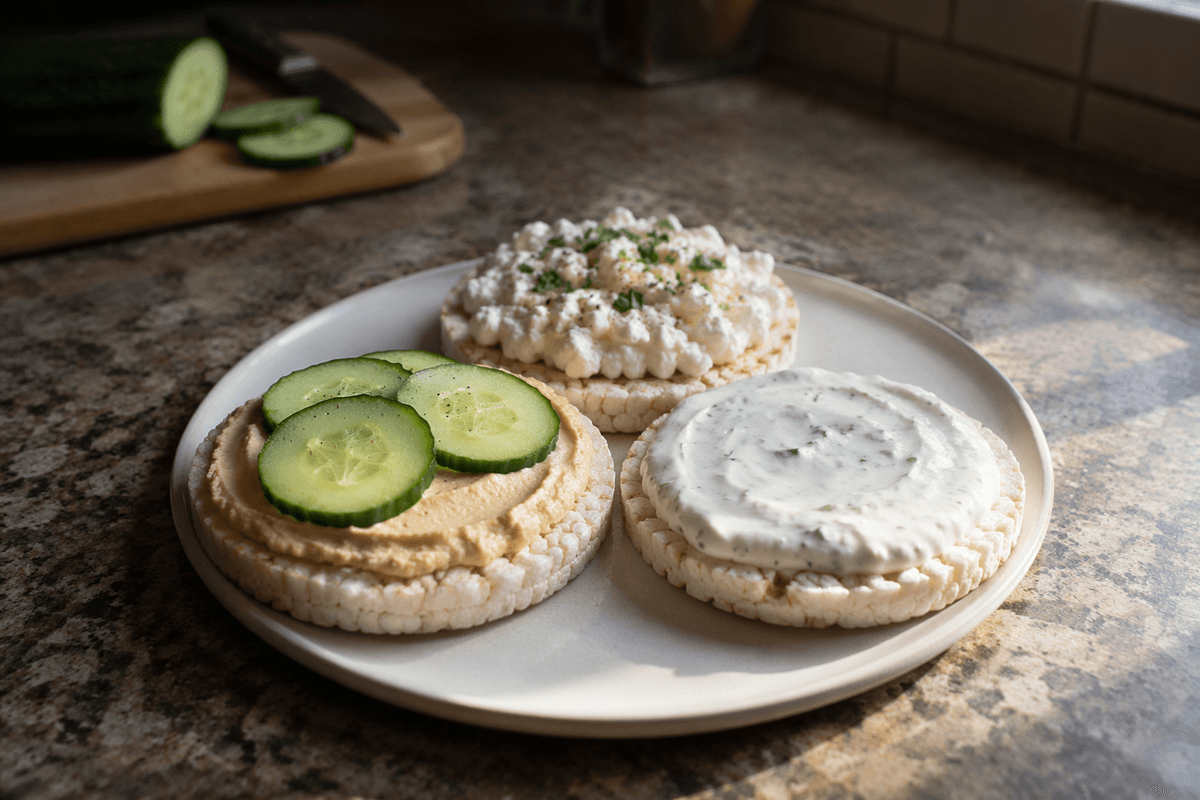
It’s usually around the one-hour mark when you learn what kind of hunger you were really dealing with. A rice cake that felt “fine” at 3 p.m. can suddenly feel like it never happened, while another day the same snack holds steady. That inconsistency often comes down to whether you needed a quick bridge to dinner, or something that could actually carry you through a longer gap without a sharper glucose swing.
When hunger is mild and you mainly want something crisp to quiet the urge to graze, a rice cake with a thin layer of protein-forward topping tends to behave more predictably—think hummus, cottage cheese, or a yogurt-based spread. If hunger is more physical (you feel empty, distracted, or you’re reaching for a second rice cake immediately), pairing the crunch with something denser usually changes the next 1–2 hours: nut butter plus chia or ground flax, tuna or egg salad, or cheese with sliced tomato or cucumber for extra volume.
For people who notice a “crash” after plain carbs, sweetness can be the tricky situation. A rice cake with honey or jam may feel like a treat but still digest fast, so adding a stabilizer—like peanut butter under fruit, or ricotta with berries—can blunt the quick up-then-down pattern. If you keep getting rebound hunger even with toppings, it may be a sign the snack is doing a job it can’t reliably do that day.
Revised understanding: when rice cakes fit best
It’s often the second look at your day—not the first bite—that changes how rice cakes make sense. If you felt steady for 90 minutes, they probably worked as a bridge. If you were rummaging again an hour later, the “light” label may have been doing more work than the snack did.
In some cases, rice cakes fit best when you want a crisp base, not a standalone fix. Their puffed starch breaks down fast, and without much fiber or protein, the body can treat them like a quick carbohydrate dose, then send hunger cues as blood glucose drops back down. That doesn’t mean they’re “bad,” but it does make the outcome less predictable on low-sleep or high-stress days.
When toppings turn into a full layer—protein, fat, or fiber—the snack behaves more like a real mini-meal, even if the calories add up faster than expected. If you’re using rice cakes to stay comfortable until the next meal, it can help to notice whether you’re choosing them for crunch, or because you’re trying to outrun hunger.