Intro: A couple tries to time two retirements
They picked a date for his retirement first, because his job was the louder clock: a pension window, unused vacation, a manager who wanted an answer. Hers was softer—consulting work that could taper off—but it was the paycheck covering health insurance until Medicare. On paper, their savings looked strong, yet the first “gap year” felt expensive once they modeled it month by month.
Social Security was supposed to be the stabilizer, and then the arguments started. If he files early to bring money in, do they give up too much later? If he waits, can she take a spousal benefit to bridge the gap, or does that force her into something permanent? They realized the question wasn’t “when do we retire,” but “whose record gets used first, and at what age,” because one wrong start date doesn’t just change this year’s cash flow—it can shrink the survivor check decades from now.
Confirm you’re actually eligible for spousal payments
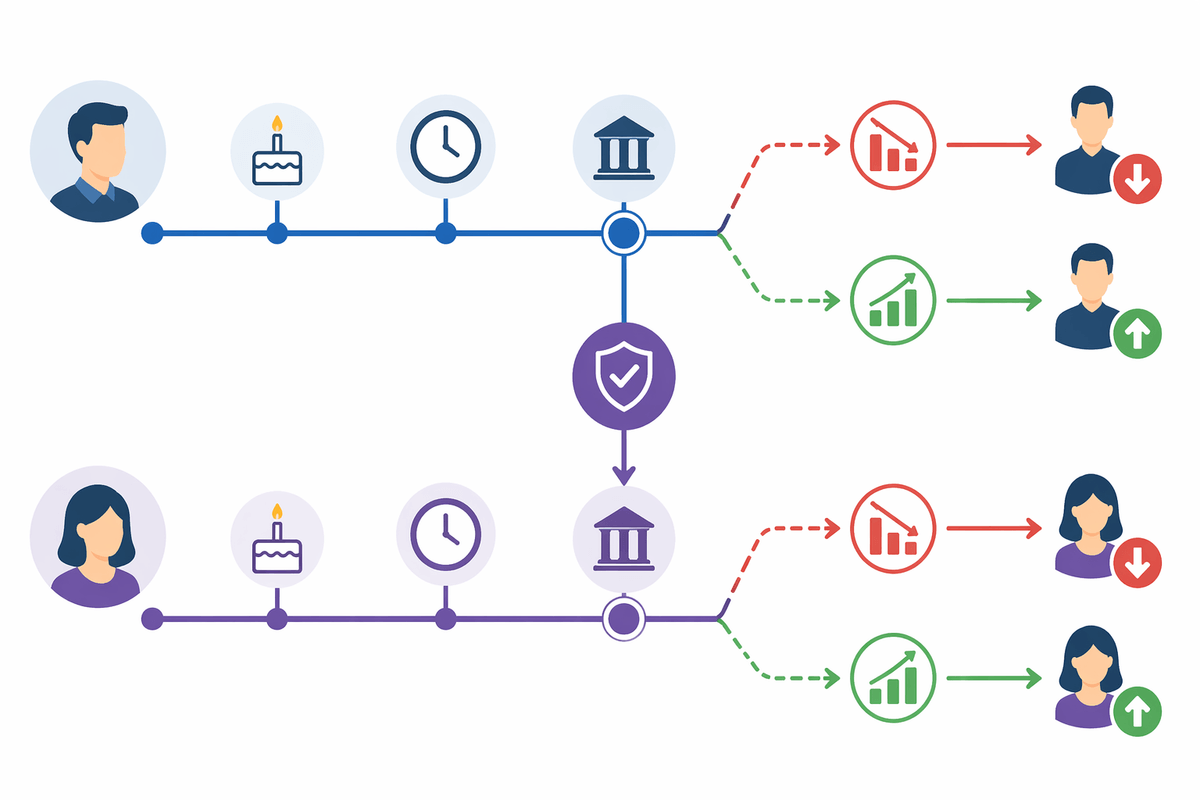
Before they argued about “bridging” with a spousal check, they hit the first gate: spousal benefits don’t exist in a vacuum. One spouse has to be entitled on their own record (usually meaning they’ve filed), and the other spouse generally can’t claim spousal before age 62. That alone reshaped their calendar, because filing early just to “turn on” spousal payments would lock in a permanent reduction on the worker’s side.
Then came the paperwork friction. They needed the marriage date, prior divorce dates (if any), and each person’s estimated PIA (the benefit at full retirement age), not just the age-70 projections. Without those numbers, “half of his” was an illusion.
Finally, they noticed the deemed filing trap: once she files before her FRA, she’s typically treated as filing for both her own and any spousal benefit, which can cap what she can receive during that gap year.
Use the higher earner’s filing as leverage
Once they had the PIAs in front of them, it was obvious whose filing date moved the whole plan. Her potential spousal amount doesn’t start because she “needs income” or because they’re married; it starts because the higher earner is entitled. That turned his claiming decision into a switch: file now and she may get a spousal top-up soon, wait and the spousal option stays dark no matter what her age is.
The leverage is that his choice also sets the ceiling on the survivor benefit later. If he files early to unlock spousal payments, he’s also accepting a permanently smaller worker benefit—often the same smaller check she would live on if he dies first.
So they stopped asking, “Can we get her spousal check?” and started pricing the trade: how many months of extra cash flow are they buying, and what’s the lifetime cost of turning the higher earner’s record on too soon?
Pick your spousal start date around FRA trade-offs
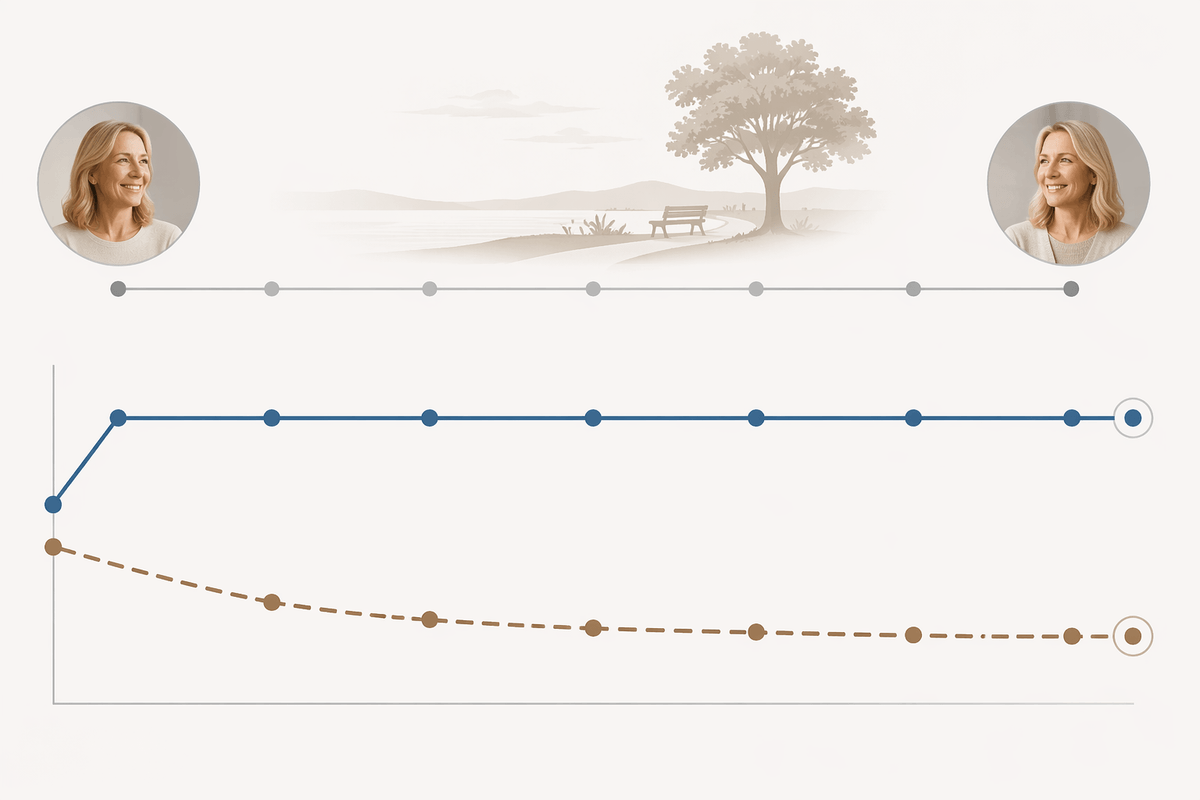
With his filing date acting like a switch, the next fight was over hers: start spousal as soon as it’s available, or wait until her full retirement age (FRA) so the spousal side isn’t haircut. The calendar pressure was real—those first 12–24 months of retirement spending were their most fragile—and an early spousal check felt like a clean fix. But the reduction for claiming before FRA is permanent, and it applies to the spousal portion the same way it does to a retirement benefit.
They had to separate two ideas that look similar in a spreadsheet. Spousal benefits don’t earn delayed retirement credits, so waiting past FRA doesn’t boost the spousal percentage. Waiting can still help if it avoids the early-claim reduction and keeps flexibility while they’re living off savings. The snag was timing: her FRA date wasn’t the same as his, and “just start it at 62” created a smaller floor for the rest of her life, even if his benefit later grew.
So the trade-off became narrower and more mechanical: how much income do they need before her FRA, and is it cheaper to fund that gap from cash, part-time work, or a smaller spousal check they can’t undo later?
When your own benefit complicates the spousal amount
Then they hit the part their “half of his” shortcut never captured: she already had her own retirement benefit. Social Security doesn’t pay two full checks; it pays her own amount first, then adds an “excess spousal” piece only if half of his PIA is higher. That meant a small change in her earnings record, or a stale estimate, could flip the spousal payment from meaningful to basically zero—right when their budget needed it to be predictable.
The timing penalty stacked, too. If she files before her FRA, her own benefit is reduced permanently, and the spousal add-on is also reduced. She isn’t just choosing a smaller check now; she’s shrinking the base that the spousal top-up sits on, and she can’t later “switch” to an unreduced spousal rate.
So they stopped modeling “spousal at 62” and started comparing PIAs, not age-70 projections, because the spousal formula is anchored to those FRA numbers—even while their cash-flow gap was happening earlier.
Divorced spouse strategies that people miss
Their friend’s “divorced-spouse” story sounded like a loophole until they looked at the dates. The marriage had to have lasted at least 10 years, and she had to be currently unmarried to claim on an ex’s record. The awkward part was timing: remarrying even a month before filing could erase the option, which matters when retirement plans and new relationships overlap.
They also learned the cleanest version of the strategy depends on age. If you were born before January 2, 1954, filing at full retirement age can allow a restricted application for divorced spousal benefits only, letting your own benefit keep growing. If you were born after that, deemed filing usually forces a combined claim, so the “take spousal now, switch later” move mostly disappears.
One more missed lever: an ex doesn’t need to have filed if the divorce is final and the ex is at least 62—provided the divorce has been final for two years. That can create a bridge without negotiating an ex’s retirement date, but the claim still inherits early-filing reductions if started before your FRA.
A smart choice that can backfire later
After all the rule-checking, the “smart” move that kept showing up in their spreadsheet was simple: have him file early so the spousal top-up turns on, then treat that extra cash flow as the bridge to Medicare. It solved a real constraint—the first two years of spending—without touching their investment plan.
But it quietly rewired the downside. His early filing doesn’t just shave his worker benefit; it often shrinks the survivor benefit she may rely on later, because the survivor check is anchored to what he locked in. The spousal payments they “bought” with an early claim can be outweighed by decades of a smaller surviving-spouse amount, especially if he dies in his 70s or early 80s.
Even if the marriage lasts, there’s no clean do-over. Withdrawal and repayment windows are limited, and a later change of heart doesn’t restore the missed delayed credits. The backfire is usually timing, not math.
Workarounds, then the limits you still face
They kept looking for an “undo” button: take benefits now, fix it later once the portfolio recovered. There are a couple of workarounds, but they’re narrow. A benefits withdrawal can reset a retirement claim only within 12 months and only if every dollar paid (including spousal payments triggered by that record) is repaid. And at full retirement age, a voluntary suspension can stop checks to earn delayed credits on the worker’s benefit.
That’s also where the limits show up. Suspending generally stops any spousal benefit being paid on that worker’s record, so “he suspends while she keeps collecting” usually fails. Deemed filing still ties her spousal decision to her own record for most people, so switching strategies later is mostly gone.
Even when a workaround is available, it can collide with real life: the earnings test before FRA, tax brackets, and the survivor benefit that stays locked to the higher earner’s claiming history.