When every lender says no, you still need cash
The rejection pattern is usually predictable: you apply, the lender pulls your report, and the offer either never comes or arrives with an APR that makes the monthly payment impossible. Meanwhile the expense doesn’t wait—car repair, deposit for housing, a past-due utility bill that will shut off in days. The friction is timing: you need money quickly, but every new application can add another hard inquiry and another “no” that narrows options further.
At this point, the practical question isn’t “Can I get a loan?” It’s “What kind of risk am I being asked to accept for access to cash?” Unsecured personal loans tend to fail first for subprime borrowers. The workable paths usually involve giving the lender extra protection—collateral, a co-signer, or a structure that limits their downside. That protection can improve approval odds and pricing, but it also changes what you stand to lose if your income doesn’t stabilize on schedule.
Secured personal loans: collateral opens a door
So the first “yes” you can sometimes manufacture is by offering something the lender can take if the loan goes bad. With a secured personal loan, the underwriting changes fast: the decision leans less on your score and more on whether the collateral is real, properly titled, and easy to value. That can matter when the clock is tight—some banks will still take days to verify liens and paperwork, while credit unions may move faster if they already have your deposit relationship.
The price usually looks calmer than the “no-collateral” offers you were just seeing, but the structure is doing the work. The lender may cap the loan-to-value, require full coverage insurance on a vehicle, or insist the collateral be cash in a savings account or CD. Those constraints lower the lender’s risk, which can lower the APR, but they also limit how much you can borrow and add setup friction when you’re trying to cover an expense that’s due this week.
What it buys you is optionality: a realistic payment at a longer term, and a path that doesn’t rely on a perfect credit profile. What it costs is that default stops being abstract. If income slips again, the consequence isn’t just collections—it’s losing the asset you used to get approved in the first place.
The catch with secured borrowing you feel later
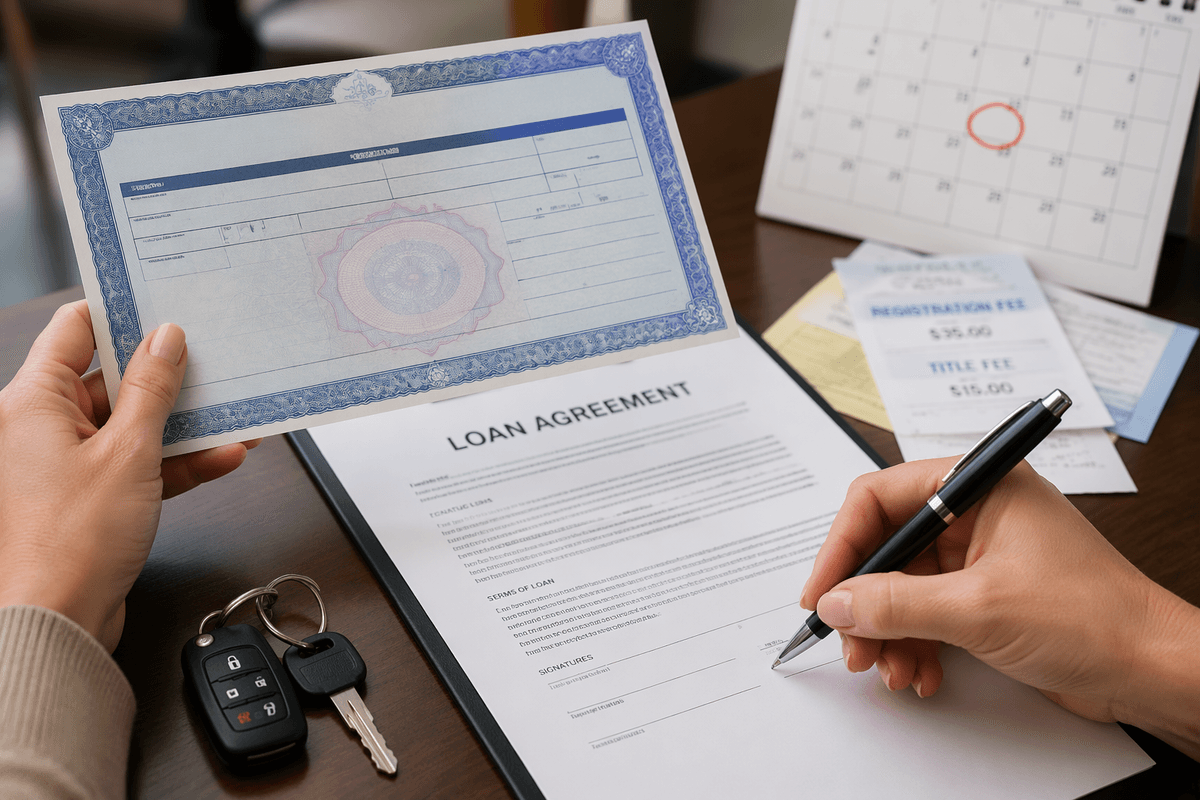
The part that surprises people is how a “reasonable” secured payment can still tighten the next month’s budget. If the collateral is cash in a savings account or CD, that money is effectively locked; even if you’re current, you can’t use it for the second emergency. If the collateral is a vehicle, the lender may require higher insurance coverage, and that premium hits at the same time as the new loan payment.
Then there’s the default math. When a repossession or forced sale happens, the asset doesn’t always cover the balance once towing, storage, legal fees, and interest are added. A deficiency balance can follow even after you’ve lost the collateral, and it can move quickly to collections if you’re already stretched.
Before signing, check for lien fees, cross-collateral clauses, and whether payoff triggers any penalties or delayed title release.
Credit-builder loans from credit unions and banks
After you’ve stared at the collateral trade-off long enough, a credit-builder loan can feel like the first option that doesn’t ask you to put a car or savings account on the line. The catch is timing: it’s not built to solve a bill due Friday. In most versions, the bank or credit union “lends” you money by placing it in a locked savings account, and you make fixed payments until it’s released. That structure lowers the lender’s risk, which is why approvals can be more forgiving even with subprime scores.
In practice, the value is twofold: reported on-time payments and a forced savings outcome at the end of the term. But the economics are still real. You’ll usually pay interest (and sometimes an upfront fee) for access to your own future cash, and missing payments can still trigger late fees and negative reporting. If the major expense can’t wait, it’s often a companion move—build credit now while you solve today’s gap elsewhere.
Co-signed loans: borrowing someone else’s trust

When the expense can’t wait but you don’t have collateral to pledge, the fastest “upgrade” some borrowers reach for is a co-signer. Underwriting shifts in a simple way: the lender prices the loan as a blend of your file and the co-signer’s, and approval odds often rise because there’s a second person legally responsible for the same debt. In practice, that can mean a larger amount, a longer term, or an APR that doesn’t explode—sometimes the difference between a payment that fits and one that breaks the budget.
The friction shows up in what the co-signer has to absorb. Many lenders treat the loan as that person’s obligation from day one: it can appear on their credit report, affect their debt-to-income ratio, and complicate their next mortgage or car loan. If you pay late, their score can take the hit before any conversation happens.
If this is the path, the “product” is really the agreement between the two of you. Set autopay, decide who gets account access, and be clear about what happens if income drops again—because the lender won’t negotiate the relationship risk that the loan creates.
Home equity borrowing for owners with damaged credit
After a few rounds of “maybe” and “not without a co-signer,” homeowners often notice a different tone when they mention equity. A lender that won’t touch an unsecured personal loan may still consider a home equity loan, HELOC, or even a cash-out refinance, because the house changes the recovery math. The trade-off is speed and paperwork: appraisals, title work, and closing timelines don’t care that the contractor needs a deposit next week.
With damaged credit, the approval gate tends to move from score to equity, income, and payment history on the mortgage. Expect tighter combined loan-to-value limits, higher rates than prime borrowers, and more fees—sometimes points—especially if the lender views the request as “cash-out to cover debt.” A HELOC can look flexible, but variable rates and a rising draw payment can turn a short-term bridge into a long budget squeeze.
The consequence is also different from other “bad credit” options: default doesn’t risk a repossession; it risks foreclosure. Before using home equity for a cash-flow gap, stress-test the payment at a higher rate and assume the expense runs over budget, because selling quickly isn’t always available when the plan breaks.
Avoiding the expensive “easy money” traps
After you’ve gone far enough to consider collateral or a co-signer, the “instant approval” ads start looking less like an option and more like a test. Payday loans, auto title loans, and many cash-advance apps solve the timing problem, but they do it by stacking costs in ways that don’t feel urgent until the second renewal or the first missed date. The money arrives fast; the repayment structure is what keeps grabbing your next paycheck.
When you’re screening offers, look past the APR headline and map the total cash-out: origination fees, subscription charges, “expedite” fees, forced arbitration clauses, and whether payments are daily or tied to direct deposit. If the loan can roll over, re-borrow automatically, or seize a car title for a small balance, treat it as a last resort and price it against the cost of being late on the original bill.
The safer pivot is slower: ask the biller for a payment plan, request a due-date change, or use a credit union small-dollar program even if funding takes a few extra days. Speed is real, but so is the trap of buying it repeatedly.