Why Barcelona feels overphotographed—and isn’t
The first time you lift a camera in Barcelona, it can feel like you’re already late—late to the “perfect” Gaudí frame, late to the same Rambla silhouettes, late to shots that have been done a million times. That’s the overphotographed feeling: not that the city lacks scenes, but that the obvious ones are oversupplied with tripods, tour groups, and predictable light. If you only have a few mornings and you’re not excited about 6 a.m. sprints, that funnel can waste a whole day fast.
What’s easy to miss is how quickly the city changes once you stop treating it like a checklist. Barcelona’s everyday photos happen on the edges of the famous routes—where cafés set up chairs, where kids cut through small plazas, where commuters move with purpose. The constraint is that “everyday” isn’t constant: some streets go dead between school runs and lunch, and some lively areas come with higher pickpocket pressure if you’re flashing a big lens. The goal isn’t to find a secret Barcelona; it’s to pick places and times where normal life reliably outnumbers photo-hunters.
How to find scenes locals actually live in
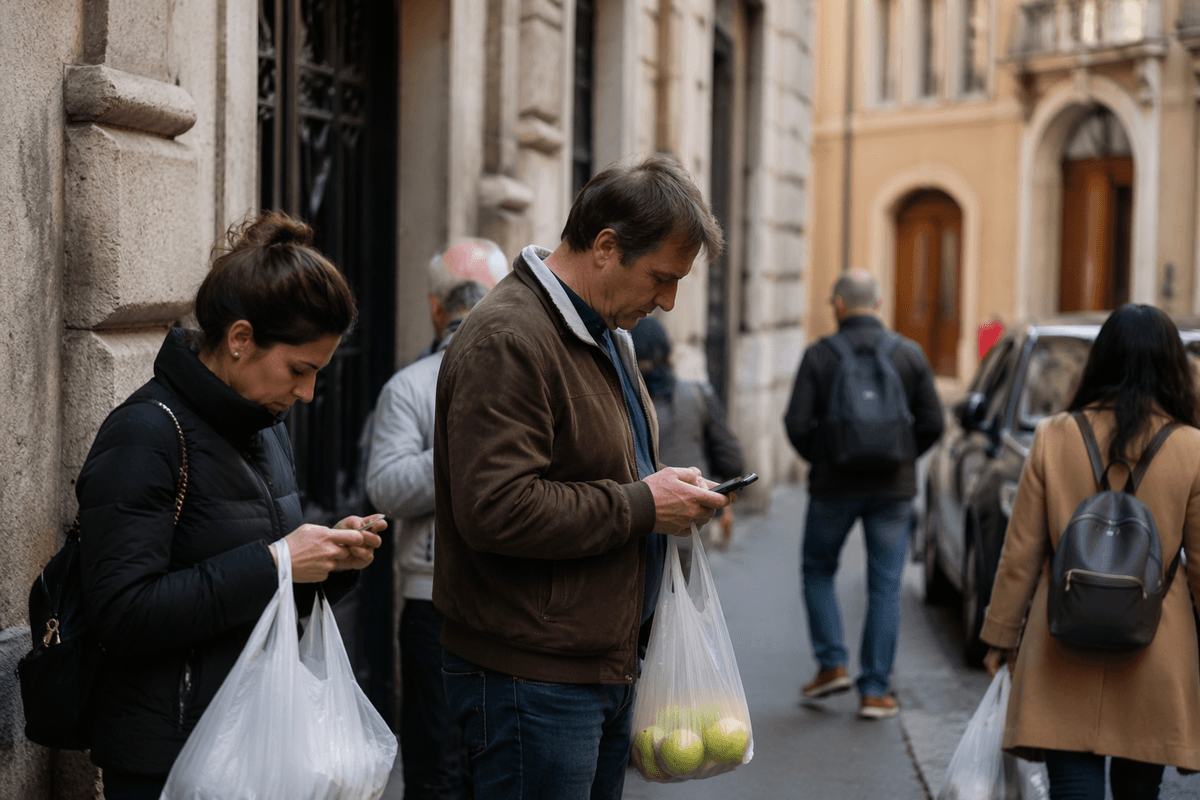
I ended up making one small rule that saved me from the “same ten shots” trap: if the street is full of people looking up, I turn and follow the people looking down—at keys, receipts, phone screens, grocery bags. That usually pulls you one or two blocks off the landmark gravity, into places where the subject matter is less theatrical but more consistent. The catch is you can’t expect instant payoff; the first five minutes can feel quiet, and that’s where a lot of visitors give up and drift back toward the obvious.
For a 3–5 day trip based centrally, think in short, repeatable loops instead of hunting “hidden spots.” Start with a market edge (not the market interior) in the first hour of daylight, then walk outward toward schools, bakeries, and transit nodes—areas that generate natural interactions without needing an event. Morning buys you cleaner light and fewer wandering tour groups, but it also means shutters half-down on some streets; if you’re not doing dawn, aim for that mid-morning overlap when deliveries are finishing and cafés are filling.
Movement matters as much as location. I had better luck picking one neighborhood spine and walking it slowly than bouncing across the city chasing pins—every metro hop costs attention, and attention is exactly what pickpockets feed on. Keep your kit intentionally boring (one body, one lens), and shoot from “waiting” positions—bus stops, corners near crosswalks, the outside edge of a plaza—where you look like you belong, not like you’re circling for targets.
Neighborhoods for grit, color, and everyday stories
The first time I tried to “just go non-touristy,” I overcorrected into the Raval with my camera too visible and my attention split between frames and my bag zipper. The street life is real there—barber shops, fruit stands, kids on scooters, people lingering in doorways—but it’s also where you’ll feel the most gear-awareness tax. If you want that grit without spending the whole walk on defense, treat the Raval like a quick edge pass: skim its calmer seams near Sant Antoni in mid-morning, shoot with one small lens, and keep moving rather than settling into a long stakeout.
If you’re staying central and want a high hit-rate with manageable crowds, Sant Antoni is the easiest “everyday Barcelona” to justify. It’s lived-in, not staged: café terraces that fill fast, dog walkers, grocery runs, the small negotiations of daily errands. The limitation is visual sameness if you stay on the broad avenues—work the side streets and crossings where people actually change pace. Late morning is the sweet spot: earlier can feel shuttered, later gets louder and less readable as lunch piles up.
For color and clean geometry without the Gothic Quarter gravity, I’d choose one of two longer walks depending on your tolerance for effort. Poble-sec up toward Montjuïc gives you steep streets, layered backgrounds, and locals moving with purpose; it’s productive, but the inclines can blunt your patience if you’re carrying too much. Poblenou, by contrast, is flatter and more spacious—modern blocks, older workshops, and sunlight that behaves better in the afternoon—but it can feel spread out, so you need a simple spine (one main avenue plus two side detours) or you’ll walk miles for scattered moments.
Light, timing, and weather that change the city
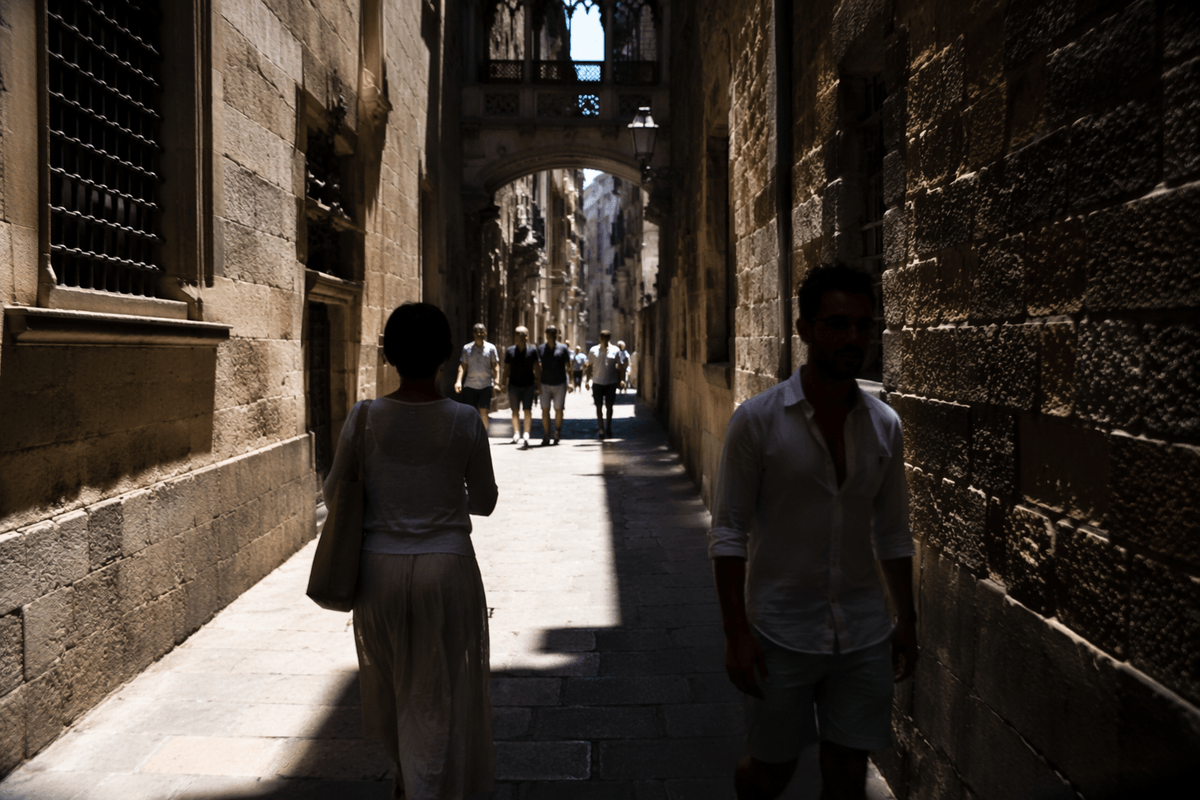
A thin cloud layer rolled in one afternoon and, weirdly, it was the best “Barcelona light” I got all week—because it took the edge off the contrast that turns faces into silhouettes between tall buildings. In the tighter central areas (Sant Antoni’s side streets, the Raval seams), hard sun is unforgiving: you either commit to graphic shadow shapes or you accept blown highlights on pale stone. If you’re not doing dawn, aim for the first clean hour after most shutters lift—roughly mid-morning—when you still get directional light but the sidewalks aren’t yet shoulder-to-shoulder.
Timing is less about sunrise and more about daily cycles. School run and commute energy show up fast, then there’s a lull where you’ll get emptier frames but fewer “moments,” especially on residential stretches of Poble-sec. Lunch is productive in Sant Antoni (terraces, quick exchanges, deliveries finishing), but it also spikes camera-awareness—people notice you more when they’re seated and facing outward. If you want longer, calmer shooting without feeling watched, late afternoon into early evening works well in Poblenou because the streets are wider and the light stays usable longer, though the spread means you’ll need a tighter route to avoid wandering.
Weather is the quiet decision-maker. Windy days push people into doorways and under awnings—great for layered frames, frustrating for clean crosswalk scenes. After rain, the city gets reflective and less dusty, but you’ll spend more time dodging puddles and watching your footing on older stone. When conditions go sideways, I default to sheltered edges (arcades, café fronts, metro exits) where you can wait without looking like you’re hunting—safer for your bag, and usually better for your patience.
Shoot respectfully—and leave with your own Barcelona
The moment I felt most “seen” with a camera wasn’t on a landmark—it was outside a small café terrace when I realized I’d been framing the same table for too long. In Barcelona, lingering with intent can read as surveillance, especially in tighter streets, so I started treating my shoots like short encounters: make the frame, take two or three shots, and then physically reset by crossing the street or walking on. It sounds minor, but it lowered tension and, practically, reduced the chance of someone clocking my gear and tracking my bag.
Respect is also a routing choice. If a scene depends on someone’s hardship (intoxication, visible distress, arguments), it may be “gritty,” but it’s rarely worth the ethical drag—or the attention it pulls. I had better results aiming at neutral, everyday exchanges: vendors packing up, commuters negotiating scooters, families on errands. When someone noticed me, a small nod and lowering the camera worked better than over-explaining; if they looked uncomfortable, I moved on. You’ll miss a few frames that way, but you leave with photos that feel like your Barcelona—built from repeated, calm walks, not one risky, crowded harvest.