Why plain water fails, even when you’re thirsty
It can be oddly easy to feel a dry mouth at 3 p.m. and still let a full glass of water sit untouched. You might take one polite sip, then drift back to email or another coffee—almost as if your body’s “thirst” message didn’t come with a clear next step.
Part of the problem is that thirst doesn’t automatically create consistent sipping. In real life, drinking is often driven by cues your brain can grab quickly: flavor, cold temperature, and whether the bottle is already in your hand. Plain room-temperature water can register as “low reward,” so the urge fades after a sip or two, even if you still need more fluid.
This is why people can be genuinely thirsty but still end the day a little behind. The mismatch shows up as small, inconsistent signals—headache that lifts after a drink, darker urine later than usual, or a late-night “catch up” feeling—rather than one obvious alarm.
What drives flavor cues to increase sipping
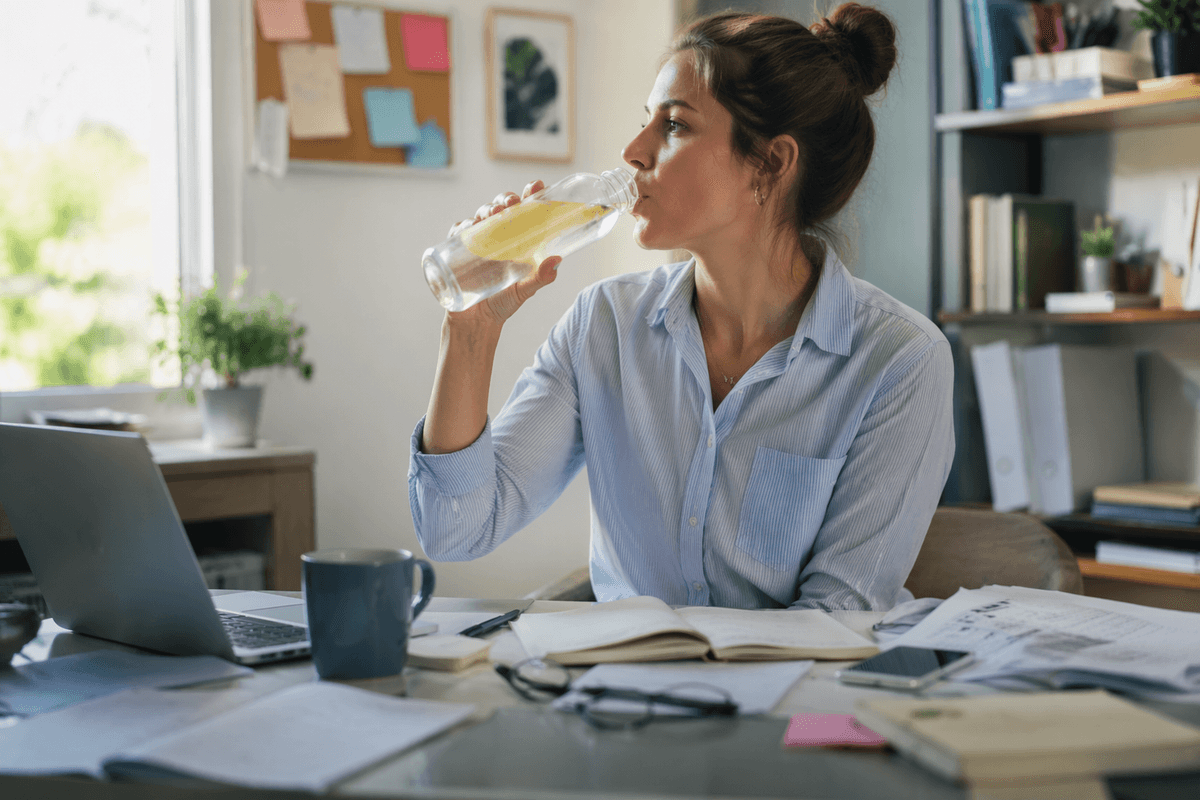
Sometimes the first sip of something lightly flavored lands differently—less like a task, more like a quick reset. Even when you’re busy and a little distracted, that tiny “that’s nice” moment can make your hand drift back to the bottle sooner than it would with plain water.
That’s not just preference; it’s how your brain tracks reward. Flavor (and even scent) gives your attention something to lock onto, so the drink feels more “worth it” after a few swallows. Plain water can fade into the background fast, especially if you’re already juggling stress or fatigue, so sipping stops before you’ve actually closed the fluid gap. Cold temperature often adds to this effect by making each sip feel more distinct and refreshing, which can nudge repeat sipping without you consciously deciding to drink more.
A pleasant taste can make it feel like you’ve had “enough,” even if your intake is still inconsistent across the day. If you notice thirst showing up late, urine getting darker by afternoon, or a pattern of suddenly chugging at night, the flavor cue may be helping—but it may also be covering a routine gap.
Infusions that feel like treats, not chores
At some point the bottle stops feeling like something you’re supposed to finish and starts feeling like something you get to reach for. That shift is often small—an aroma when you open the lid, a hint of sweetness without sugar—and it can matter most on the days when you’re already tired of “trying” to hydrate.
Infusions that read as a treat usually have one clear, familiar note and a little sensory contrast. Citrus peel with a few slices of cucumber can taste brighter than you expect because the scent does a lot of the work, even when the water itself is barely flavored. Frozen berries can act like both flavor and “ice,” giving you a colder, slightly tangy sip that stays interesting for longer than a squeeze of juice. Fresh mint or basil can add a clean, almost dessert-like smell, which makes the next sip feel more rewarding even if you can’t fully taste why.
When the flavor is especially pleasant, it can be easy to assume you’re drinking “a lot” just because you’re enjoying it—then realize later you only took a few satisfying sips. If the bottle is emptying steadily and you’re not hitting that late-afternoon dry-mouth moment as often, the treat effect is probably doing what you want; if not, it may just be making the same pattern feel nicer.
Infusions that stay subtle and still refreshing
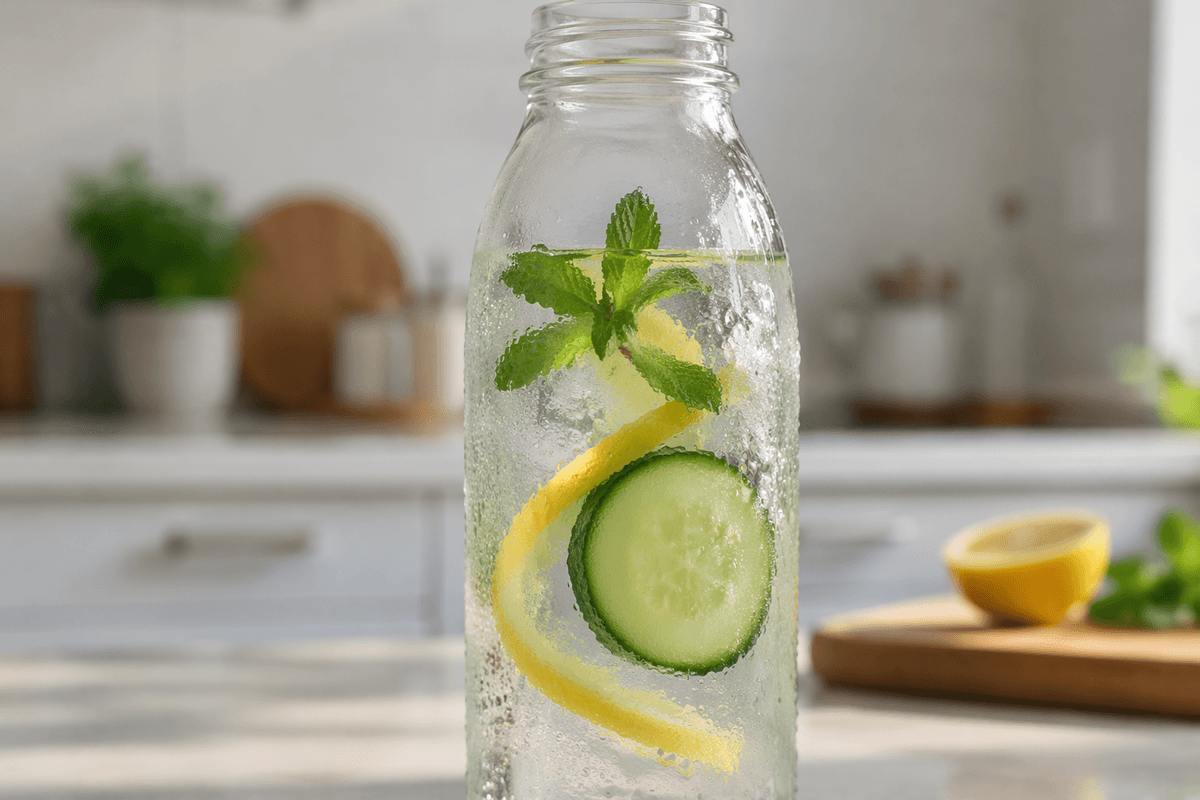
You notice it when you go to take a big sip and don’t brace for it. The water tastes like water—just cleaner and colder somehow—so it doesn’t clash with lunch, coffee, or that slightly off taste you can get in your mouth during a long afternoon.
Subtle infusions tend to work when the scent does more than the flavor. A strip of lemon peel (more peel than juice), a few thin cucumber slices, or a small sprig of mint can make each sip feel “finished” without turning the bottle into a beverage you have to commit to. That matters because strong flavors can start to feel sticky or tiring; a mild aroma stays easy to return to, even when you’re distracted.
When the taste is barely there, it’s easy to assume it isn’t helping—then realize you’ve been refilling without noticing. On other days, the subtlety can make sipping fade again, and the late-day dry mouth shows up right on schedule.
The hidden cause of “infused water fatigue”
Somewhere around day three or four, the bottle that felt “special” starts to taste a little flat. You might still like the idea of infused water, but you catch yourself taking smaller sips, or letting the same mix sit longer because you don’t feel like dealing with it again.
A lot of that fatigue comes from sensory adaptation. When you smell and taste the same citrus-mint (or berry-cucumber) profile over and over, your brain treats it as familiar background and the reward signal drops. The infusion hasn’t changed much, but your attention does—so the cue that was pulling you into frequent sipping stops doing its job. This can feel confusing because you’re “doing the hydration thing,” yet the old signs—dry mouth in the afternoon, a creeping headache, darker urine later—start showing up anyway.
If the flavor only works when you prep it “right,” any day you’re rushed can turn the bottle into a reminder of one more task, and skipping setup often means skipping sips.
When a smart upgrade causes unexpected discomfort
The first hint is often subtle: a sour trace lingering at the back of the tongue, or a stomach that feels unexpectedly active after a few long drinks. That’s what makes it confusing. A flavored water setup that was supposed to help hydration suddenly starts feeling harder on the body than plain water ever did.
Much of the difference comes from repeated exposure rather than sheer quantity. Citrus slices, pineapple, vinegar-based mixes, and other strong infusions bring more acidity into the bottle, and sipping them throughout the day keeps the mouth and upper stomach in near-constant contact with that acidic environment. Over time, the flavor can stop tasting “refreshing” and start registering as sharp, heavy, or faintly nauseating. Carbonated water changes the sensation further by adding gas and pressure, so fullness and burping arrive earlier than expected.
Flavor intensity can also change drinking patterns without making it obvious. Strong infusions often dull thirst cues because each sip feels more satisfying, which leads some people to drink less often but in much larger amounts at once. A heavy stretch of liquid sitting in the stomach—especially alongside coffee, a rushed meal, or long gaps between eating—tends to feel far more uncomfortable than the same volume spread gradually across the day.
Reducing setup friction so hydration actually happens
It usually breaks down in the two minutes between thinking “I should drink something” and actually having something ready. You reach for the bottle, notice it needs a rinse, the fruit is gone soft, the lid smells faintly like yesterday’s mint—and suddenly coffee feels like the simpler choice.
That’s setup friction, and it works like a tiny tax on your attention. When the steps aren’t automatic, your brain does a quick cost-benefit check: clean the bottle, cut something, refill, wait for flavor. If you’re already tired or focused, that effort can outweigh a vague thirst signal, so sipping gets delayed until symptoms are louder.
The people who keep intake steady often aren’t more disciplined; they’ve removed decisions. A washed spare bottle, a cold pitcher already in the fridge, or a small rotation of “default” add-ins reduces the number of moments where hydration depends on motivation. If you still notice late-afternoon dry mouth or darker urine even with a better system, that’s useful feedback that the routine may be slipping again.