Why Central Europe’s best views are on rails
The moment I stopped trying to “optimize” Central Europe with rental-car logic was somewhere between a lake and a cliff—on a train where the window felt like a moving panorama and my only job was to stay awake. That sounds romantic, but it’s also practical: rails here put you on the scenic side of valleys and rivers without the constant micro-decisions that driving demands (parking, tolls, mountain roads, weather). But you’re trading absolute spontaneity for a timetable, so your best views come from choosing the right lines, not just the right towns.
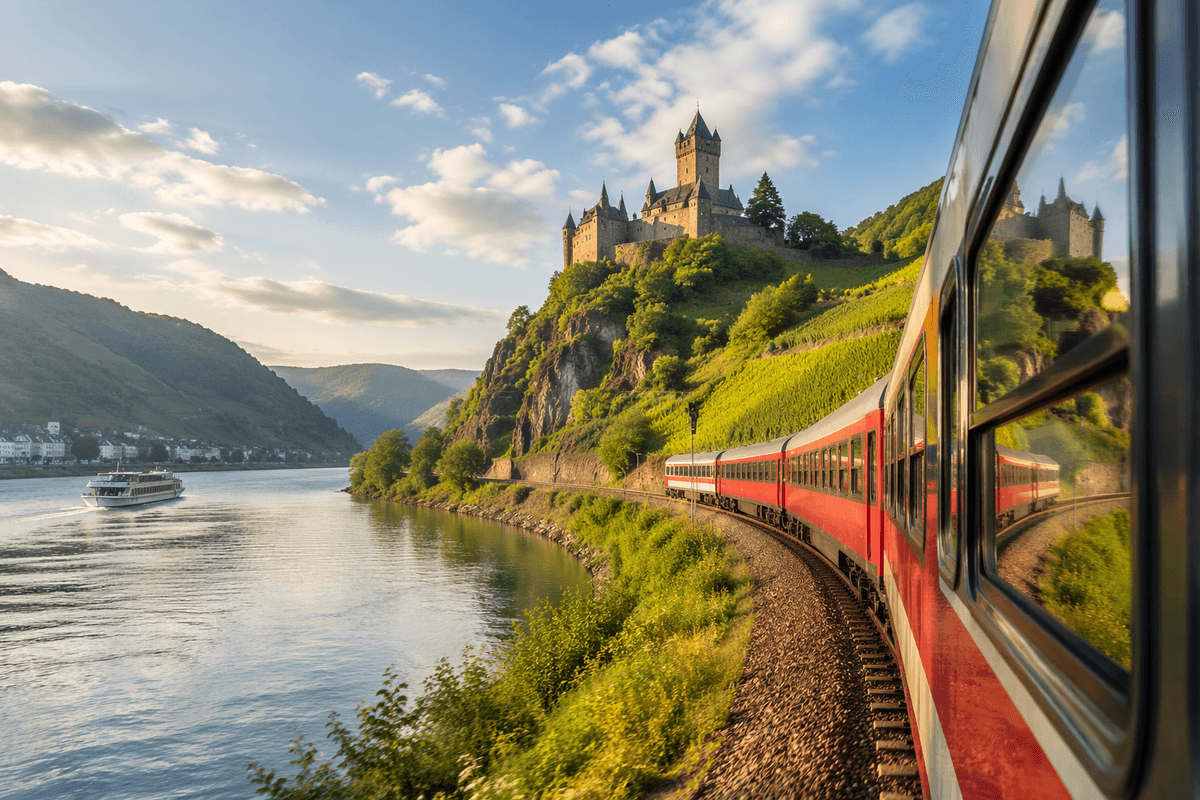
What makes trains win, especially for a first trip, is how consistently the scenery “shows up” without complicated transfers. The Rhine Valley (between Koblenz and Bingen) gives you castles-per-mile with an easy, frequent regional train—great payoff, minimal planning—though it can feel crowded on sunny weekends. In Switzerland, Luzern–Interlaken is almost unfairly pretty for a straightforward ride, but the price of that simplicity is higher fares if you book late. And Austria’s Salzburg–Innsbruck line threads mountains in a way that driving can’t replicate—unless you’re willing to slow-crawl behind tour buses.
The other advantage is you can put your energy into a few smart reservations (when they matter) and let the rest breathe. You’ll still hit friction—peak-season sold-outs on the famous panoramic trains, or a last-minute platform change—but it’s usually solvable with one adjustment, not a domino chain of rerouting.
What “easy to plan” actually means on these routes
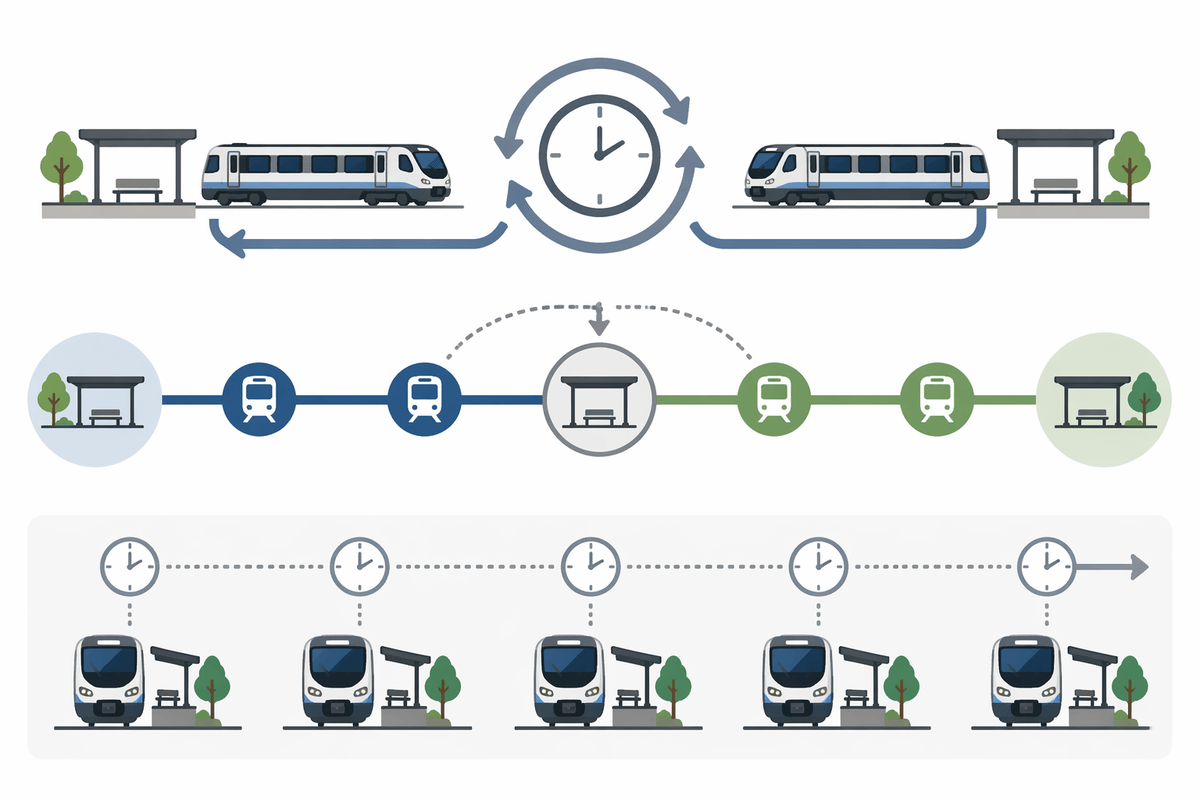
“Easy to plan” on these routes mostly means you can treat the train like a repeating shuttle instead of a one-shot event: direct (or one obvious change), hourly-ish frequency, and platforms that don’t require a scavenger hunt. The Rhine corridor regional trains are the clearest example—low commitment, plenty of departures—though the “easy” part can turn into standing-room if you hit a sunny Saturday. Switzerland’s scenic staples are similarly straightforward on paper, but the friction shifts to cost: the later you buy, the more you pay, even when the ride itself is simple.
The second layer is reservations—and knowing when you can ignore them. Many regional trains across Germany/Switzerland/Austria don’t require seat reservations, which keeps your day flexible, but it also means you’re competing for window seats at peak times. Cross-border segments are usually smooth, yet they’re where little snags show up (fare rules changing, app tickets not loading in a tunnel, a missed connection suddenly taking 45 minutes to fix). If your itinerary only “needs” one train per day, the whole trip feels lighter.
Scenic, low-stress routes worth building a trip around
I realized I’d planned too many “maybe” towns and not enough actual rail days, which is backward if views are your priority. If you want a route that feels scenic almost the whole time without becoming a logistical project, I’d build around four lines that behave predictably even when your energy doesn’t. The first is the Rhine Valley regional run (Koblenz–Bingen, and you can extend toward Mainz): frequent departures, no reservation drama, and it’s easy to hop off for a castle stop if the weather cooperates. The limitation is comfort—on warm weekends you might be standing, and the “best” side of the train isn’t guaranteed if you board late.
For a Switzerland hit that doesn’t require doing the full “named panoramic train” thing, Luzern–Interlaken is the cleanest: roughly two hours, one train, lakes-to-mountains progression that still feels special even in mediocre light. It’s low-stress operationally, but it’s where procrastination costs money; buying closer in can mean noticeably higher fares, and you’ll feel that on a mid-range budget.
In Austria, Salzburg–Innsbruck is the most “set it and forget it” alpine corridor: about two hours, frequent Railjet service, and scenery that builds instead of popping in one brief section. You’re paying with time compared to flying between hubs, but you’re also not burning a day on airport friction.
If you want one border-crossing that stays simple, Munich–Salzburg–Vienna works because each leg has strong frequency and clear station flow; you can reserve seats for the long segment when you care about a quiet window, but you’re not forced into a single departure. Peak summer is the only real gotcha—leave bookings too late and you’ll still get there, just with fewer “nice” options.
Tickets, seats, and apps: simplest booking workflow
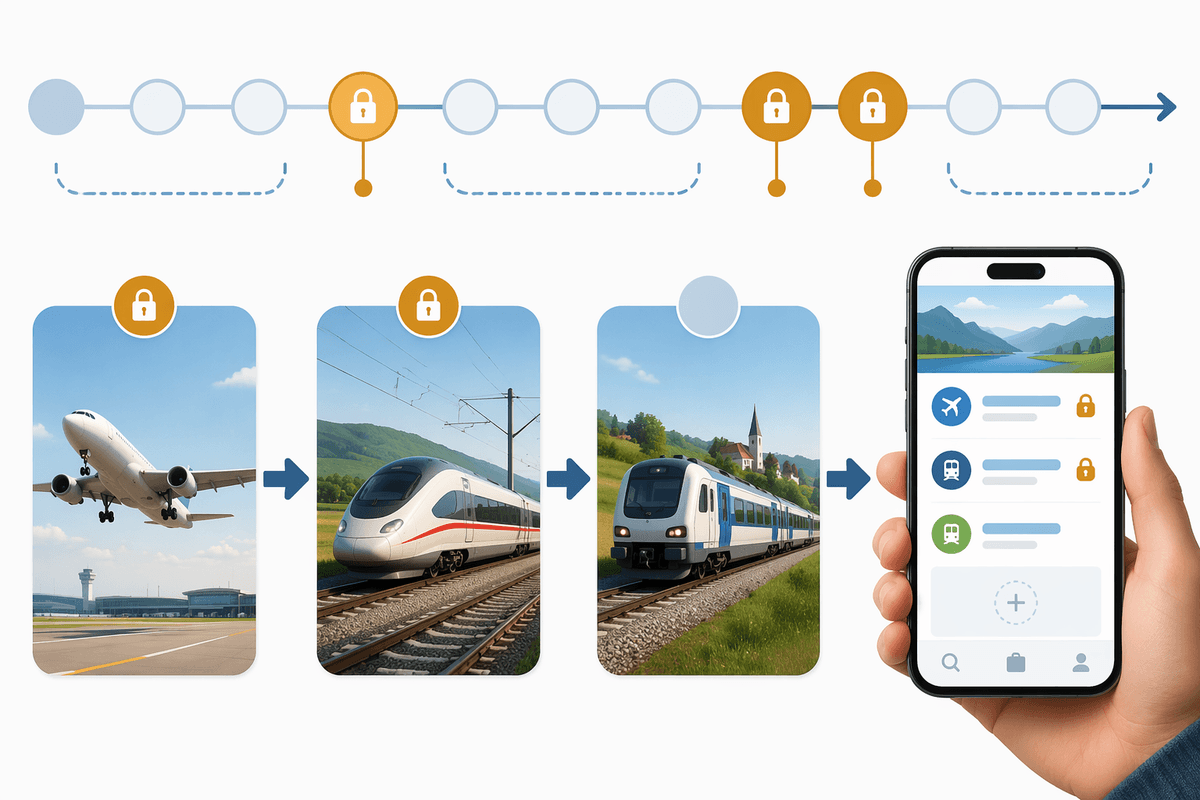
I learned the hard way that “I’ll just buy it on the day” works beautifully right up until it doesn’t—usually when you’re tired, it’s raining, and you’re staring at three similarly named train categories on a ticket machine. The simplest workflow is to decide which days are truly non-negotiable (airport arrival day, a long cross-country hop, anything that would wreck your plan if it’s full) and lock only those. Everything else stays on “show up and go,” which keeps the trip flexible without turning every morning into a pricing puzzle.
For booking, I keep it boring: use the national operator app/site for where you’ll ride most (DB for Germany, ÖBB for Austria, SBB for Switzerland, ČD for Czechia), and take screenshots of QR codes because tunnels and station dead zones are real. Seat reservations are the lever: on Railjet and longer Germany/Austria intercity runs, paying a small extra fee can buy you a quieter two hours and a reliable window; on regional trains (including the Rhine Valley hop), reservations either don’t exist or won’t save you from crowds. In Switzerland, the constraint is less “sold out” and more “why is this so expensive today?”—booking earlier helps, but if you’re using a Swiss Travel Pass, you’ll still want to check whether a given panoramic-style segment needs a separate reservation so you don’t get surprised at boarding.
The one thing I’d avoid, if you value low-stress, is stacking third-party bookings across borders unless you’re getting a clear savings: when something slips, it’s harder to tell who owns the problem. Keeping your key tickets in one or two operator apps makes delays feel like an adjustment, not an admin project.
Choosing your first route and leaving room for surprises
The easiest first pick is the line that forgives indecision: one direct ride, high frequency, and a clear “bail-out” option if weather turns. If you’re split, I’d choose one Switzerland day for the reliable wow-factor and one Germany/Austria corridor day for value—then keep the Rhine-style regional stretch as your flex buffer, because it still works even when you wake up late. The only thing I’d lock early is any long intercity leg where a bad seat (or no seat) would sour the day.
Leave two half-days intentionally unbooked. That’s where a sunny forecast, a missed connection, or plain fatigue stops being a problem and becomes the plan. If you can end each day knowing you only “needed” one train, you’ll enjoy the views more—and spend less time negotiating with apps on a platform.