Why blood sugar swings feel worse than expected
That heavy-eyed dip about an hour after a meal can feel out of proportion to what you ate, especially if the plate didn’t look “sugary.” Sometimes it even comes with a jittery edge or a sudden need to snack, which can be confusing when you were full not long ago.
One reason is timing. Fast-digested carbs can move glucose into the bloodstream quickly, and the body may answer with a larger insulin release to bring levels down. If that response is a little strong, glucose can fall faster than your brain likes, even if it doesn’t drop into a dangerous range. That mismatch can feel like fatigue, fog, or irritability.
When spikes happen often, some people notice the swings feel less predictable—fine one day, rough the next—because sleep, stress hormones, and activity change insulin sensitivity. Meals that include fiber and unsaturated fat (like avocado) tend to slow glucose entry, which can make the rise-and-fall feel less abrupt.
Carb speed, not sugar, drives many spikes

It can be oddly frustrating to see a higher reading after something that wasn’t sweet—like rice, cereal, or a thick slice of toast—because it feels like you “did the right thing.” That’s often a speed issue more than a sugar issue, and the mismatch can make the crash afterward feel sharper than the meal looked.
Starches break down into glucose, and some do it fast. When a meal is mostly quick-to-digest carbs (especially when it’s low in fiber, fat, and protein), the stomach empties sooner and glucose reaches the small intestine in a more concentrated wave. Blood glucose can rise quickly, and insulin may surge to manage it. If that insulin response overshoots even a little, you may notice fogginess, shakiness, or a sudden hunt for snacks—without a clear reason.
Adding avocado changes that “wave” in a quieter way. Its fiber and unsaturated fat can slow digestion and glucose entry, which doesn’t guarantee a flat line, but often makes the curve less abrupt.
What avocados change beneath the surface
You might notice the difference first as a quieter stomach—less of that sudden “empty” feeling that shows up even when you ate enough. But it can be inconsistent: the same toast-and-egg breakfast may feel steady one day and oddly urgent the next, which makes it tempting to blame willpower instead of physiology.
Avocado tends to change the pace of what happens after you swallow. Its unsaturated fat and fiber can slow gastric emptying, so starches don’t reach the small intestine in one concentrated rush. With a slower delivery, glucose may enter the bloodstream more gradually, and the insulin response may not need to spike as sharply to keep up. That doesn’t guarantee a low peak, but it can soften the curve.
Fat and fiber stretch the stomach and trigger gut hormones that influence fullness, so your brain may read the meal as more complete. When those cues arrive late or unevenly—because of stress, poor sleep, or a very fast-carb base—the meal can still feel strangely unsatisfying.
Hormones and hunger signals respond to meal texture
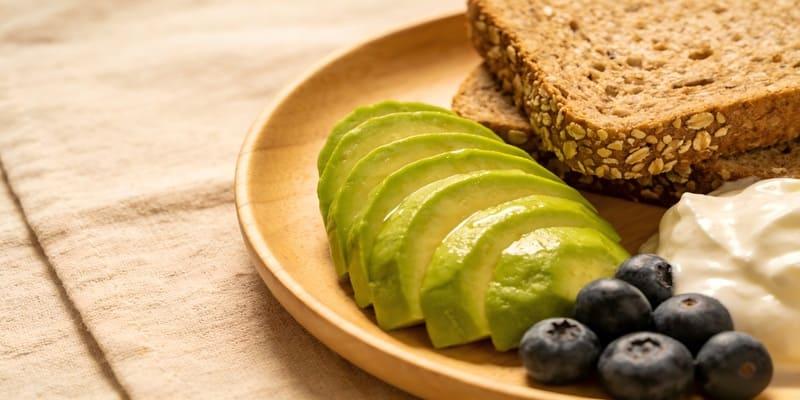
Sometimes the confusing part isn’t the meter—it’s how quickly hunger comes back. A meal can feel “big enough,” yet an hour later there’s a hollow pull for something crunchy or sweet, as if your body didn’t get the message. That can feel like a self-control problem, but it may be a timing problem.
Texture plays a role in how fast the gut sends feedback upstream. Softer, more processed carbs tend to break down and move through quickly, so glucose arrives fast while fullness signals lag behind. Meanwhile, insulin rises to manage that quick entry, and in some people the drop afterward feels like an urgent need to eat—even if glucose never falls dramatically.
When avocado is part of the meal, the mix often becomes thicker and slower to clear. That can increase stomach stretch and prolong contact with the small intestine, where hormones that support satiety are released. It’s not perfectly consistent—stress and sleep can blunt those signals—but the “still satisfied” feeling may last longer.
Portion and pairing decide the blood sugar outcome
It’s easy to assume that if avocado is on the plate, the rest “won’t count,” and then feel thrown off when the reading still climbs. That mismatch often shows up when the carb portion is simply large or concentrated—two big tortillas, a heaping bowl of rice, a thick stack of chips—even if the meal feels balanced in your mind.
Avocado can slow the rate that glucose enters the bloodstream, but it doesn’t remove the glucose load from starches. When the carb base is big enough, the intestine still absorbs a lot of glucose over time; the curve may be stretched out, not erased. Pairing matters in a similar way. If avocado is added to mostly refined carbs with little protein, insulin may still need to rise quickly, and the “crash” feeling can arrive later and feel harder to connect to the meal.
On days when the same pairing feels different, it may be because stress hormones and sleep shift insulin sensitivity, so a portion that felt fine last week suddenly feels like too much.
Simple meal frameworks that naturally fit avocado
It often shows up as a small surprise: you add avocado and still feel that familiar slide later, but you also notice the meal “held together” better when the plate had a clearer structure. When the meal is built around one main starch, it’s easy for the carb to become the bulk of the bite. Avocado works best when it’s not just a topping, but part of a three-part pattern that changes how quickly the meal leaves the stomach.
One framework is a “base + anchor + buffer” plate. The base is a measured carb you actually want (toast, rice, tortilla). The anchor is protein that slows overall absorption by keeping digestion active longer. The buffer is avocado plus a fibrous plant (greens, peppers, beans), which increases thickness and delays the concentrated wave of glucose reaching the small intestine. It can still be inconsistent—soft bread versus dense bread, or a rushed meal versus a slow one—but the same ingredients tend to behave differently when they’re arranged this way.
Another pattern is “dip-and-scoop” instead of “stack-and-crunch.” When avocado is mashed into a spread with protein nearby (Greek yogurt dip, tuna, eggs, tofu) and the crunch comes from vegetables or smaller portions of chips, the bites are less starch-dominant. That shift can make the rise gentler, even if the meal doesn’t look dramatically different.
When a smart avocado choice feels surprisingly off
It can be discouraging when you do the “right” thing—add avocado to a meal—and still feel wired, sleepy, or unusually hungry later. Sometimes the discomfort is that the meal tasted balanced, yet your body reacts like it was mostly carbs, and it’s not obvious why.
One reason is that avocado mainly changes timing, not total carbohydrate exposure. If the base is still a fast, dense carb (white rice, refined bread, chips), the glucose load can remain high; it may just arrive in a longer, flatter wave. That can shift the moment you feel off—later instead of sooner—so it’s easier to misread as random, or blame the avocado itself.
There’s also day-to-day physiology. Poor sleep or stress hormones can reduce insulin sensitivity, so a portion that was fine last week may land differently today. If that “surprisingly off” pattern keeps repeating, it may be worth treating it as a signal to reassess the whole plate, not a single ingredient.