The “healthy snack” halo around raisins
It’s easy to toss a little box of raisins into a bag and feel like you’ve made the “good choice,” especially when you’re tired, rushed, or trying not to hit the vending machine. Because they start as fruit, raisins often carry a quiet health halo—sweet, familiar, and small enough that it doesn’t register as a real snack.
That halo can be misleading in a specific way: your brain tends to treat “fruit” as automatically light, even when the form has changed. The sweetness reads as natural, and the bite-size pieces make the amount feel smaller than it is. In some moments, that can blur the line between a quick pick-me-up and an easy-to-overdo handful.
If you’ve ever felt unsure afterward—“Was that actually filling?”—that hesitation is part of the pattern, not a personal lack of willpower.
Why drying fruit concentrates sugar and calories
You notice it most when the bag is nearly gone and it still doesn’t feel like you ate much. The pieces are so light and dry that your hand can keep dipping in without the “I’m having a snack” signal kicking in, and the amount is hard to judge by sight alone.
What changed isn’t that grapes suddenly became “bad,” but that the water is largely gone. Water is what gives fresh fruit its volume and slows you down as you chew and swallow. When it’s removed, the sugars that were spread out across a whole bunch of grapes get packed into a much smaller space, along with more calories per bite. So the same sweetness that feels gentle in a juicy grape can land more like a concentrated dose in a small handful of raisins.
That concentration can create a mismatch between what your mouth experiences (small, easy, quick) and what your body has to process (a fairly dense carbohydrate load). In some cases, that’s why raisins can feel oddly “insubstantial” while still adding up fast.
Portion size: why a small handful matters
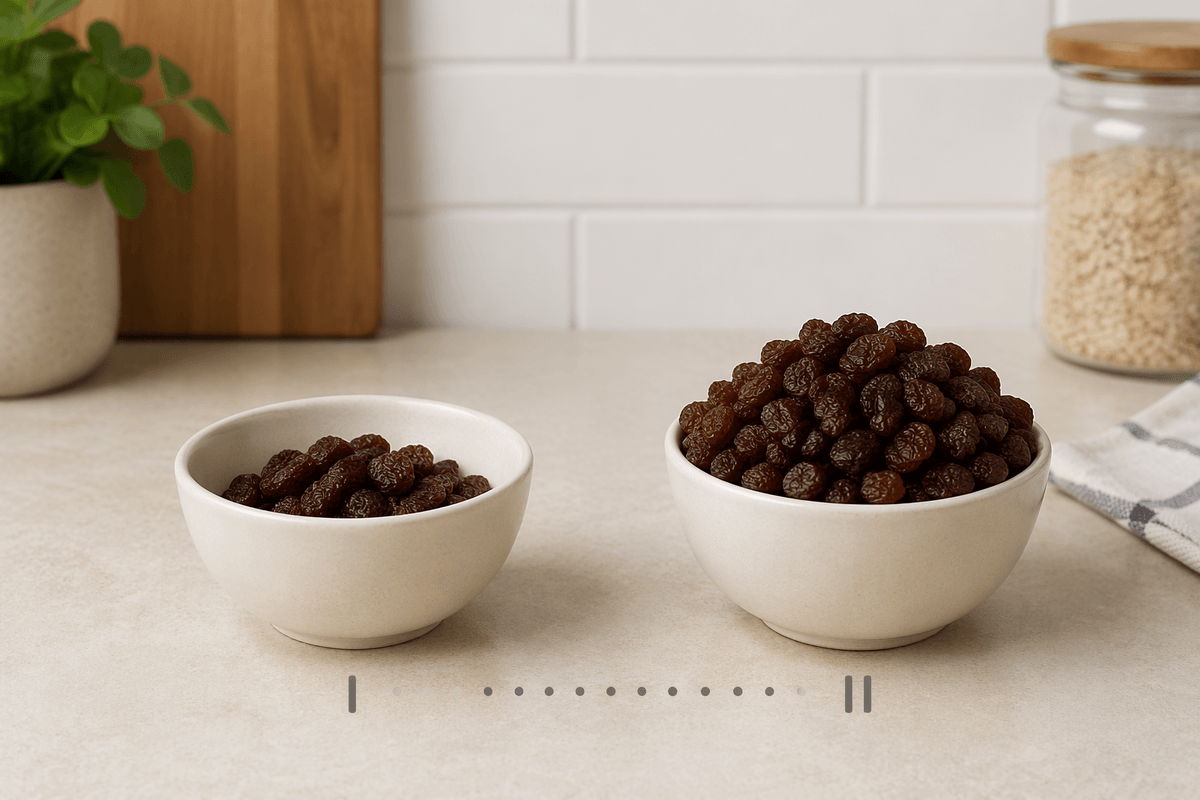
It’s often the moment you glance down and realize the pile in your palm is gone in seconds. Because raisins don’t take up much space, a “small handful” can quietly turn into a second handful before it registers as a real portion, especially when you’re walking, working, or talking.
Your eyes and stomach are using volume as a cue, and raisins don’t give much of it. With less water and less chew time than fresh fruit, the snack can slip past the usual pacing signals that help your brain tag something as “enough.” That can feel inconsistent—sweet and satisfying in your mouth, but not clearly settling in your body.
For many people, a measured serving feels surprisingly small at first. But that small amount can still deliver a meaningful carbohydrate hit, which is why portions tend to matter more with dried fruit than they do with the same fruit fresh.
What drives the quick energy lift people notice
Sometimes it hits halfway through a meeting or a climb: that quick sense of your brain “coming back online” after a few bites. It can feel almost immediate—like your body was waiting for something sweet and easy, and the switch finally flipped.
That lift often comes from how fast raisins can deliver carbohydrate. With much of the water removed, the sugars are compact, and they don’t need much breaking down before they move from your gut into your bloodstream. As blood glucose rises, your body can use it for working muscles and for the steady background energy your brain relies on. The relief can feel clean and convincing, even if you’re not very hungry.
Because there’s usually very little protein or fat in the mix, the rise can be sharper than you expect from something that still reads as “just fruit.” In a busy moment, that can be easy to misread as “I needed more food,” when what you may be noticing is simply a rapid, short-term fuel bump.
The confusing part: hunger rebound and energy dip
Then there’s that odd moment later when your stomach feels awake again, even though you remember eating something sweet not long ago. It can be uncomfortable and a little confusing—like the snack “didn’t count”—and it’s easy to assume you simply need more.
In some cases, the rebound has less to do with willpower and more to do with timing. Raisins can raise blood glucose fairly quickly, and your body often answers with insulin to move that glucose into cells. When the rise is sharp and the snack is mostly carbohydrate, the drop afterward can feel noticeable—less steady focus, more restless hunger cues, and a pull toward more sweet or starchy food. Because raisins don’t take up much room, stomach stretch signals may also be weaker, so fullness and energy don’t always line up.
That mismatch is why raisins can feel perfect in the moment but strangely unsatisfying later. If you keep seeing that pattern, it may be a sign to treat them as quick fuel rather than a stand-alone “keep me full” snack.
Fiber, potassium, and polyphenols: real benefits

You might notice the difference when the sweetness fades but your mouth still feels “clean,” not sticky or heavy. That’s one of the reasons raisins can feel like a better choice than candy in the same moment—even if the portion still takes effort to keep consistent.
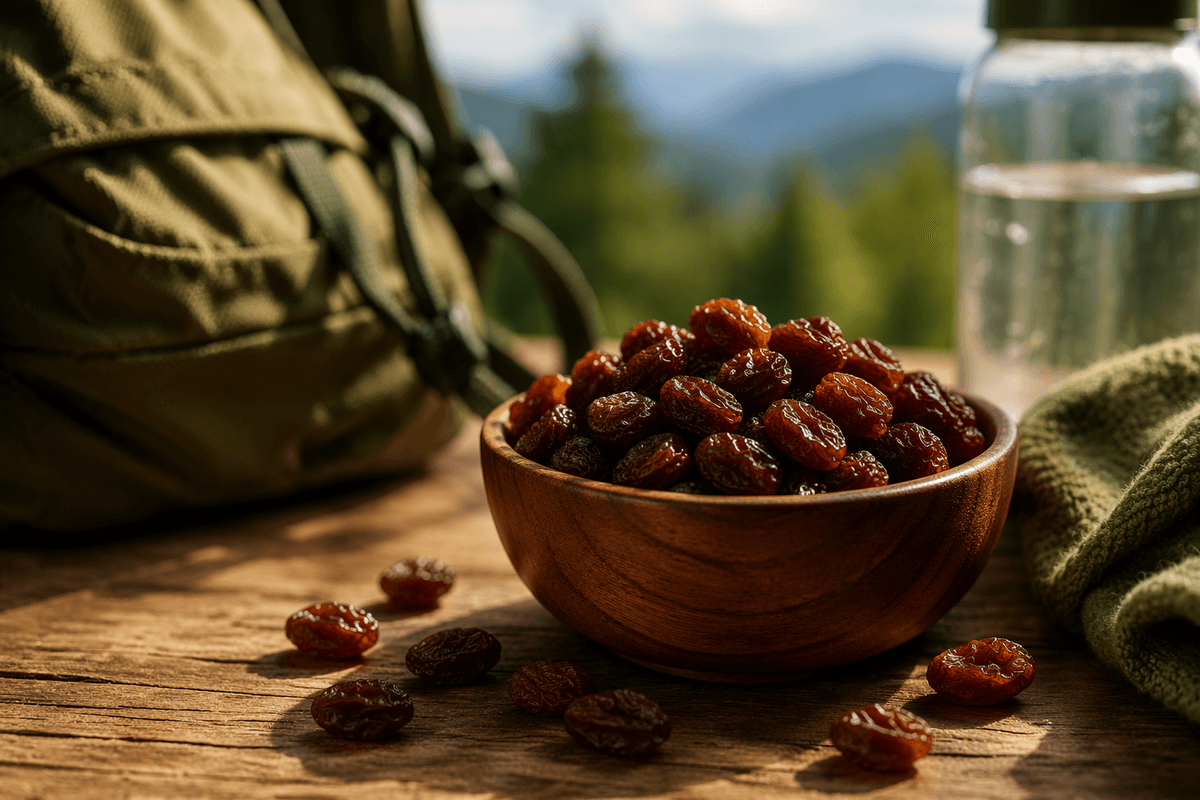
Raisins do bring some real nutrition along with the sugar. Their fiber can slow how quickly the snack leaves your stomach and how fast sugars move through your gut, which may soften the swing for some people, even if it doesn’t erase it. They also contribute potassium, a mineral your body uses for fluid balance and normal muscle and nerve signaling—something hikers and post-workout snackers tend to care about, whether they name it or not.
Then there are polyphenols, plant compounds that can act as antioxidants and may support gut bacteria in ways that don’t feel obvious day to day. The tricky part is that these benefits don’t always “show up” as fullness or steady energy, so it’s easy to misinterpret a nutrient-dense food as automatically satisfying.
Revised understanding: matching raisins to your needs
At some point you may notice you reach for raisins in two very different moods: as a quick fix when you feel flat, and as a “healthy snack” when you want something that should hold you over. When those two needs get blurred together, the results can feel inconsistent—sometimes helpful, sometimes like it only made you think about food more.
A more workable frame is to treat raisins as concentrated carbohydrate that’s easy to absorb, not as a default between-meal anchor. In your body, that can mean a faster rise in blood glucose and a stronger insulin response than the small volume suggests, especially if you’re already running low on fuel. But when you’re actually looking for steadier appetite control, the same quickness can backfire, because the snack doesn’t provide much protein or fat and doesn’t create much stomach stretch.
That’s why the context matters. In a long hike, during a workout, or right after one, raisins may behave more like useful fuel. At a desk, when the goal is to feel settled until the next meal, it often takes more intentional portioning—and sometimes something alongside them—to keep the “small handful” from turning into a loop of quick sweetness and returning hunger.